Trigger Happy

TRIGGER HAPPY

10″w x 9″h x 8d

Ceramic and steel

 A trigger cut from a rifle, the result of Santa Fe’s gun buy-back program, lies submerged and encased in clear plastic within this cracked gun-blue bowl.  Mirroring the tradition of some native peoples, leather straps hold the broken bowl together.  A glance inside the bowl reveals something more than the brightly polished trigger.  There a nest contains three fragile robin blue eggs.
Ode to Joy

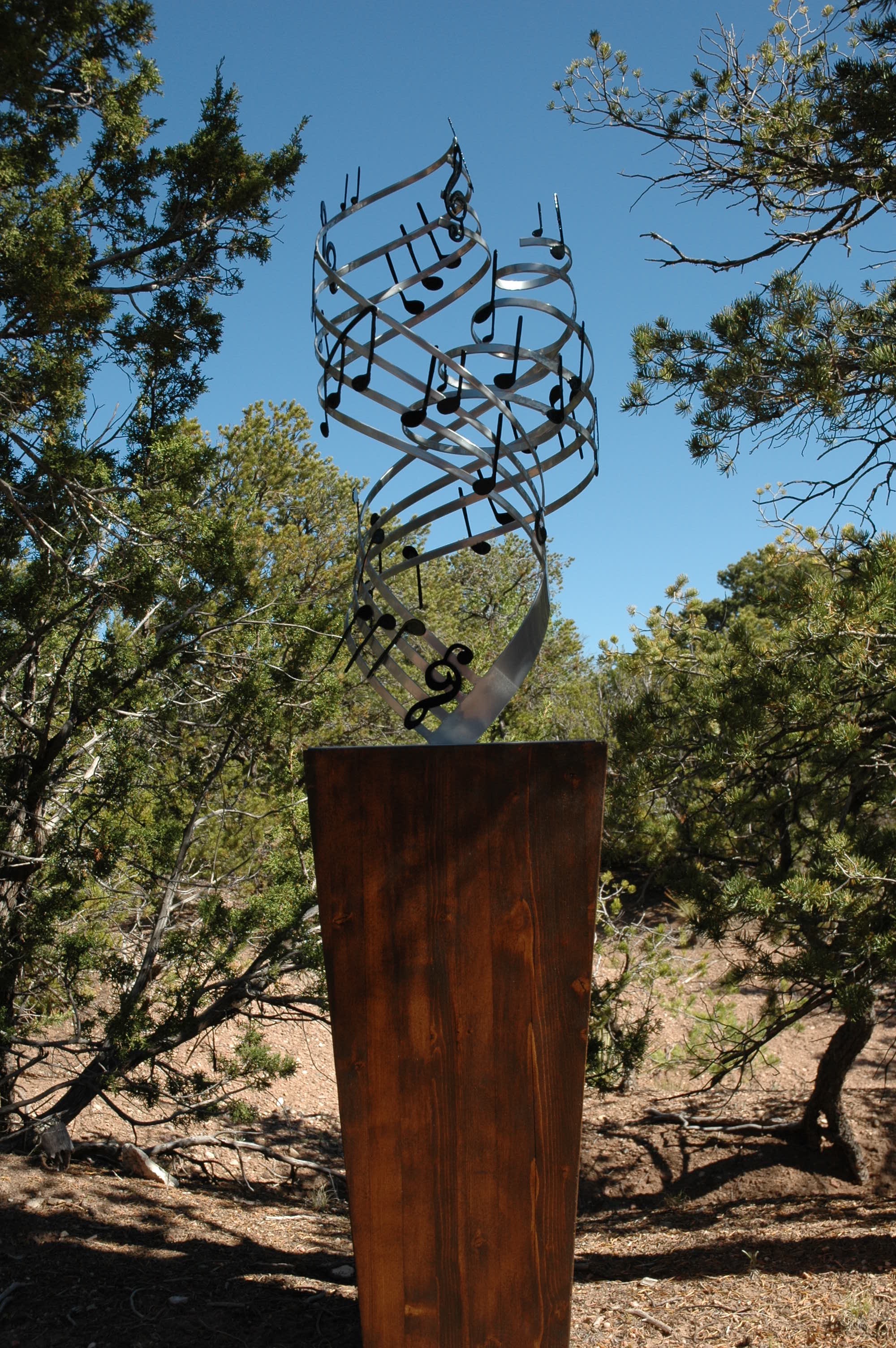
ODE TO JOY

Steel 36″h x 15″w x 15″d

Wood base 34″h x 15″w x 15″d

This steel sculpture on a wooden base is one of a triptych: “Ode to Joy (Beethoven),  “The New World Symphony” (Dvork) and “Ending On A Positive Note.”

Many say that we live in a noisy world. It is also a musical one.

Lullabies hummed during night hours introduced us to music. If fortunate enough to have hospice care as we die, music may be the last sounds we hear.  And between those times we are immersed in song.

Filmmakers and marketers know its power.  So do churches.

Then there is another kind of music.  We find it when life becomes frenetic and we need to pull apart for a time.  Off goes the internet, out come the ear buds.  It is then we hear a child breathing, rustling of leaves, the sound of a plane overhead, the wail of a coyote, the ping of a wind chime, or the creak in floor boards. It is all music when we choose to listen.

Beethoven is to my liking.  He may not be yours.  No matter.   My hope is that the sculpture awakens lightsomeness and a sense of joy.

Loss

LOSS

Ceramic, Steel Stand

22h x 12w x 13d

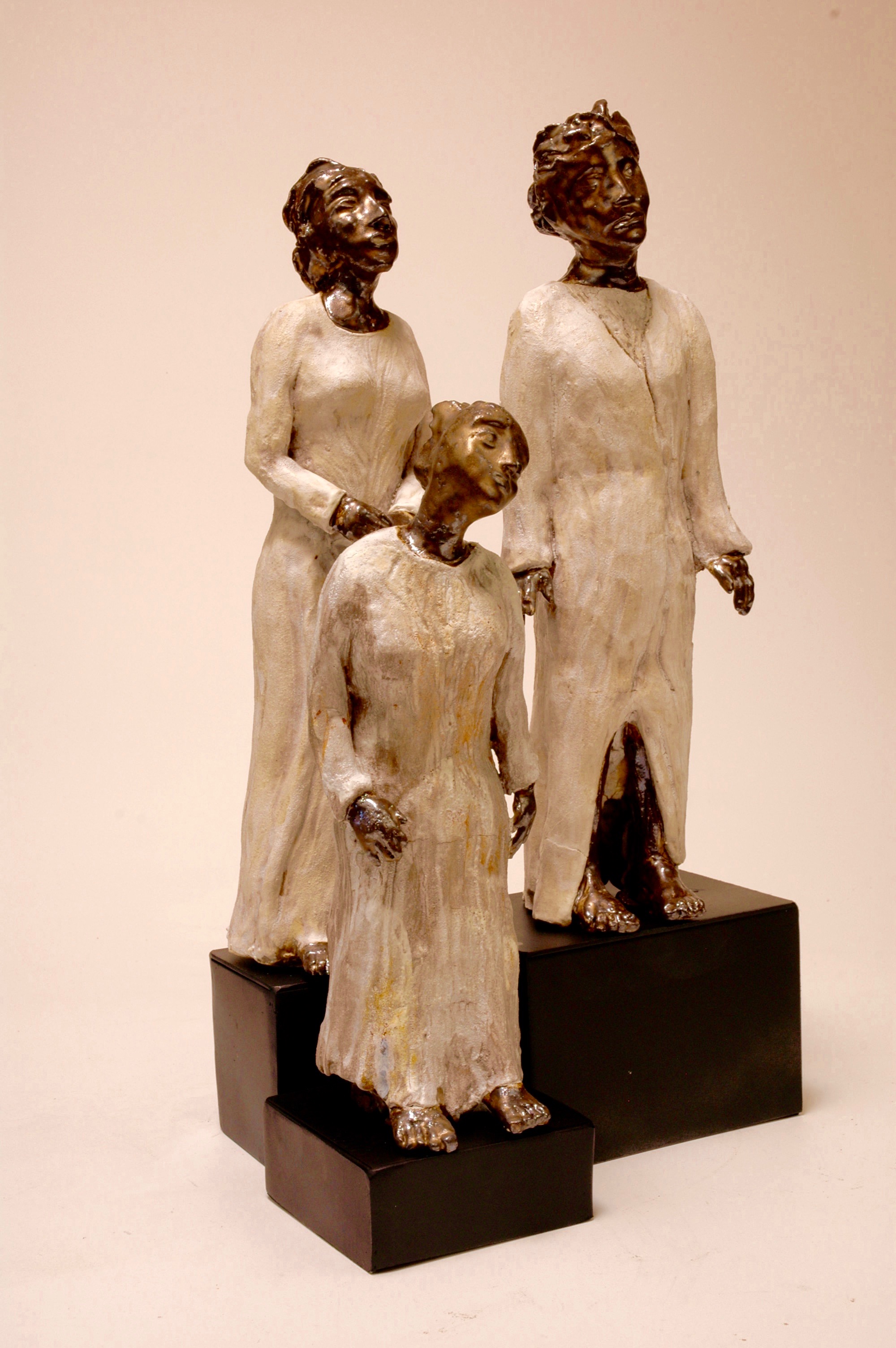
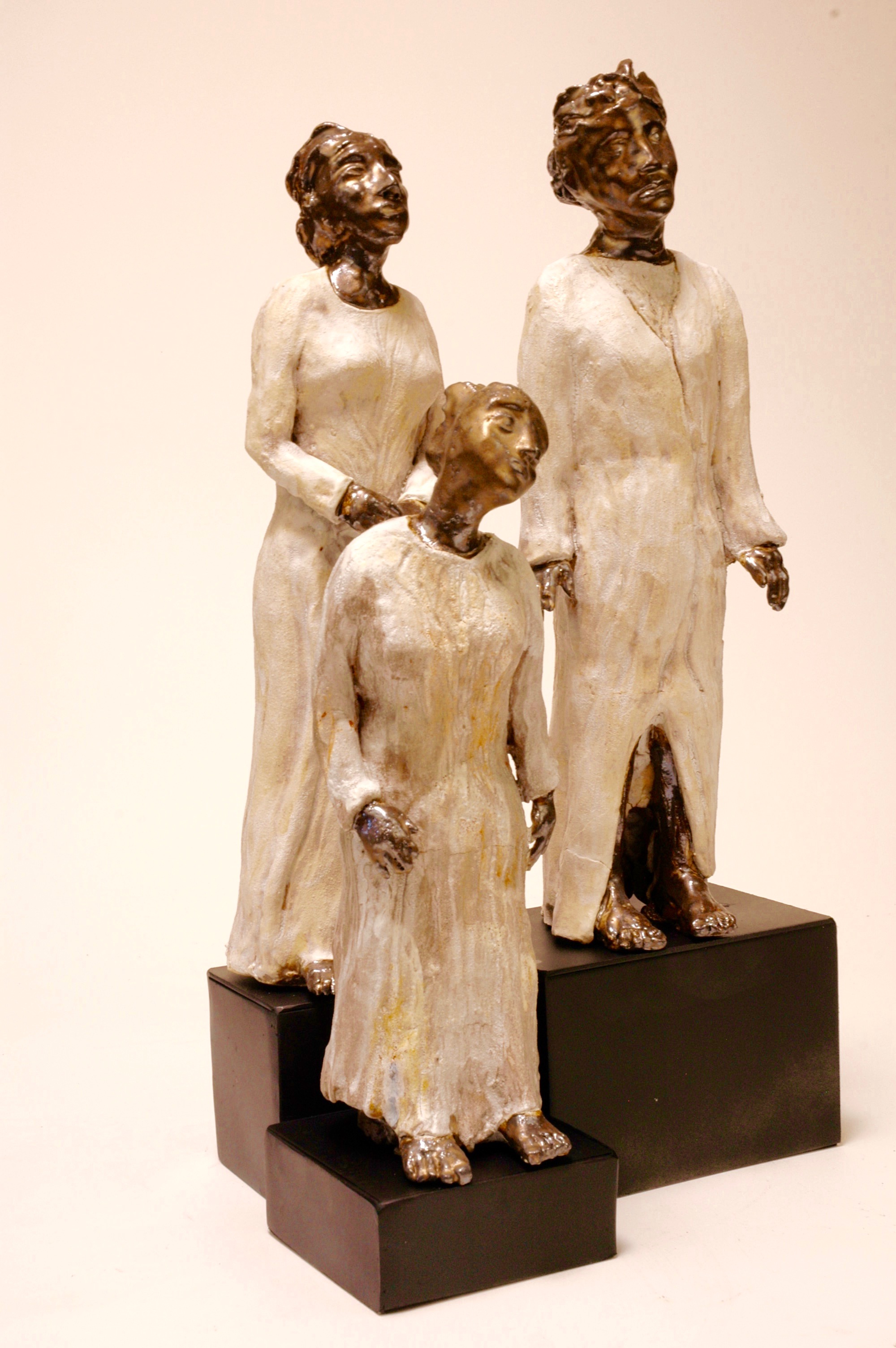
Yesterday the news media a reported the found body of a young woman, raped, burned and buried along a desolate trail in one of our parks.  I cannot imagine the feelings of her mother and loved ones.

In face of death, particularly of loved ones, words are of little consequence.  It is presence that is so important.

How better to express this experience than by the image of the women at the foot of the cross? They look look up at the man they loved. Their arms hang as if helpless.

My hope is that this piece is a comfort to someone who knows what it is like to experience the death of a loved one.

Burial Vessels

Burial Vessels

12″ x 6″x 6″

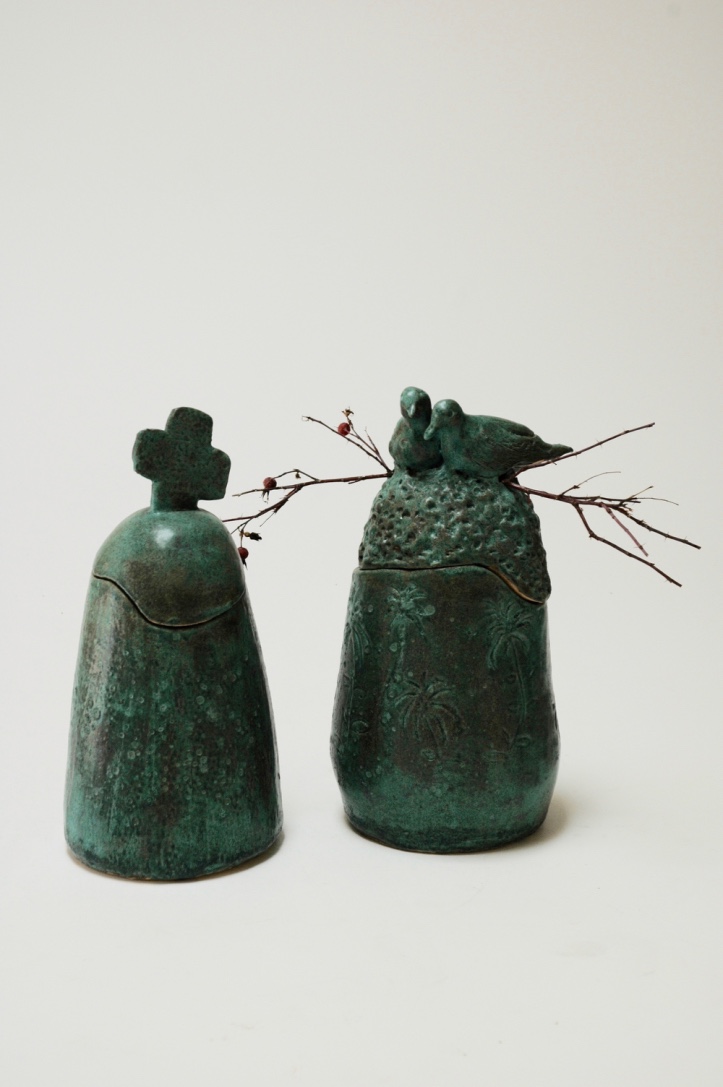
A loved one requested that I sculpt funeral urns for herself and her husband. I declined. How could I do that for loved ones? It seemed macabre. Then, as fortune would have it, I read Richard Dawkins’ haunting thought. “We are going to die, and that makes us the lucky ones.” He referred to the sobering realization that the unlucky have never been born.

“The potential people who could have been here in my place but who will in fact never see the light of day outnumber the sand grains of Arabia. Certainly those unborn ghosts include greater poets than Keats, scientists greater than Newton. We know this because the set of possible people allowed by our DNA so massively exceeds the set of actual people. In the teeth of these stupefying odds it is you and I, in our ordinariness, that are here.”

His words left me with a lingering sense of wonder. They also freed me to work on the vessels that will at some future time hold the remains of loved ones. The pieces took months to make. What at first seemed macabre, turned into an activity that provided extended moments to reflect on the gift of loving relationships.

Boy From Aleppo

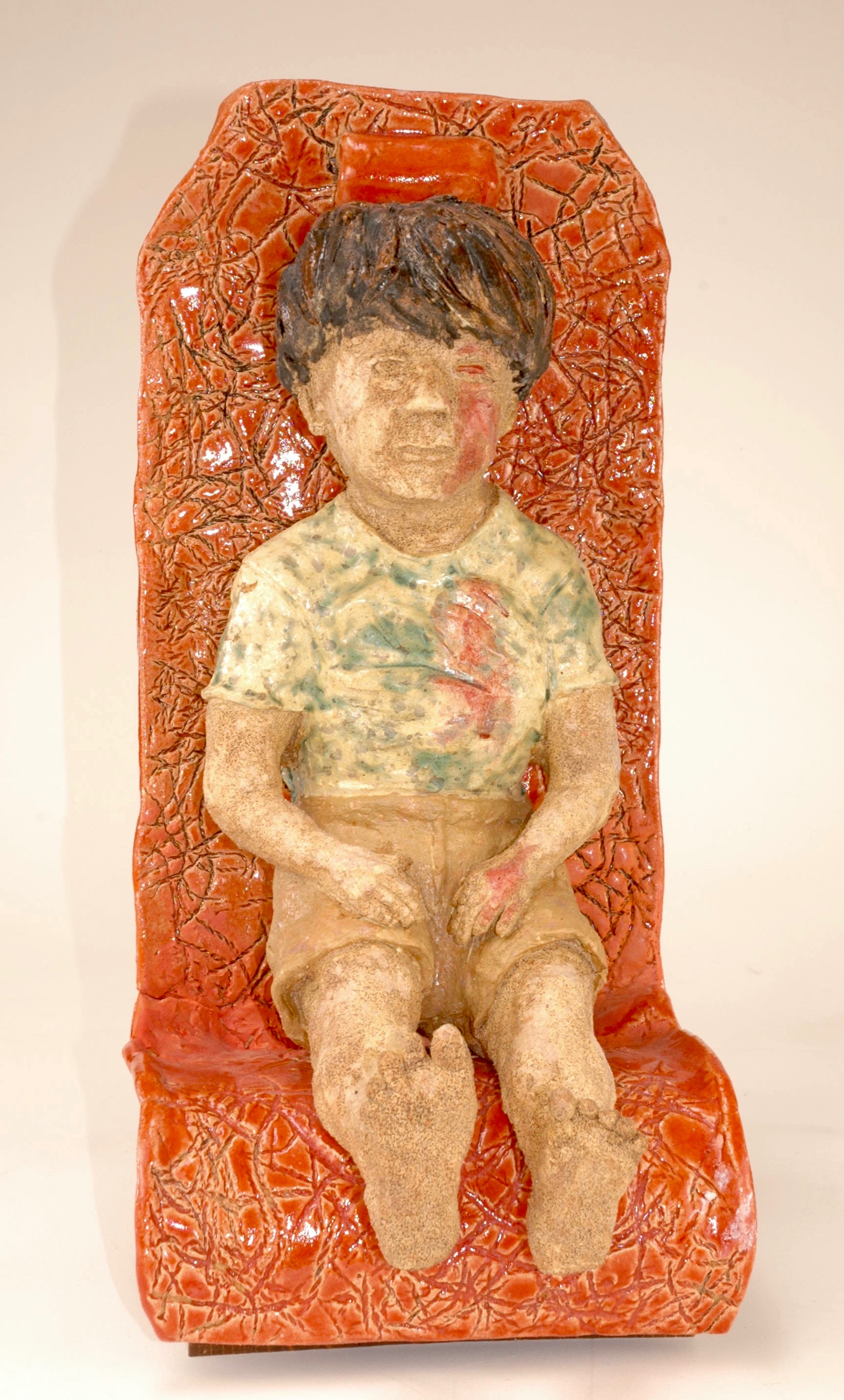
The photo of a dazed little boy from Aleppo sitting in an ambulance as a causality of war made front page news in 2016. His image is likened to the one from from the Viet Nam era when a photographer caught a naked young girl, burned and petrified, arms pleading, fleeing for her life. Who can forget that photo?

The image of the youngster from Aleppo is also difficult to forget.  I have sculpted him as a way to express the loss of innocence.  This boy has been introduced to war and its consequences.

                Boy From Aleppo

 18″ x 8″ x 9″

Wind

IMG_0831

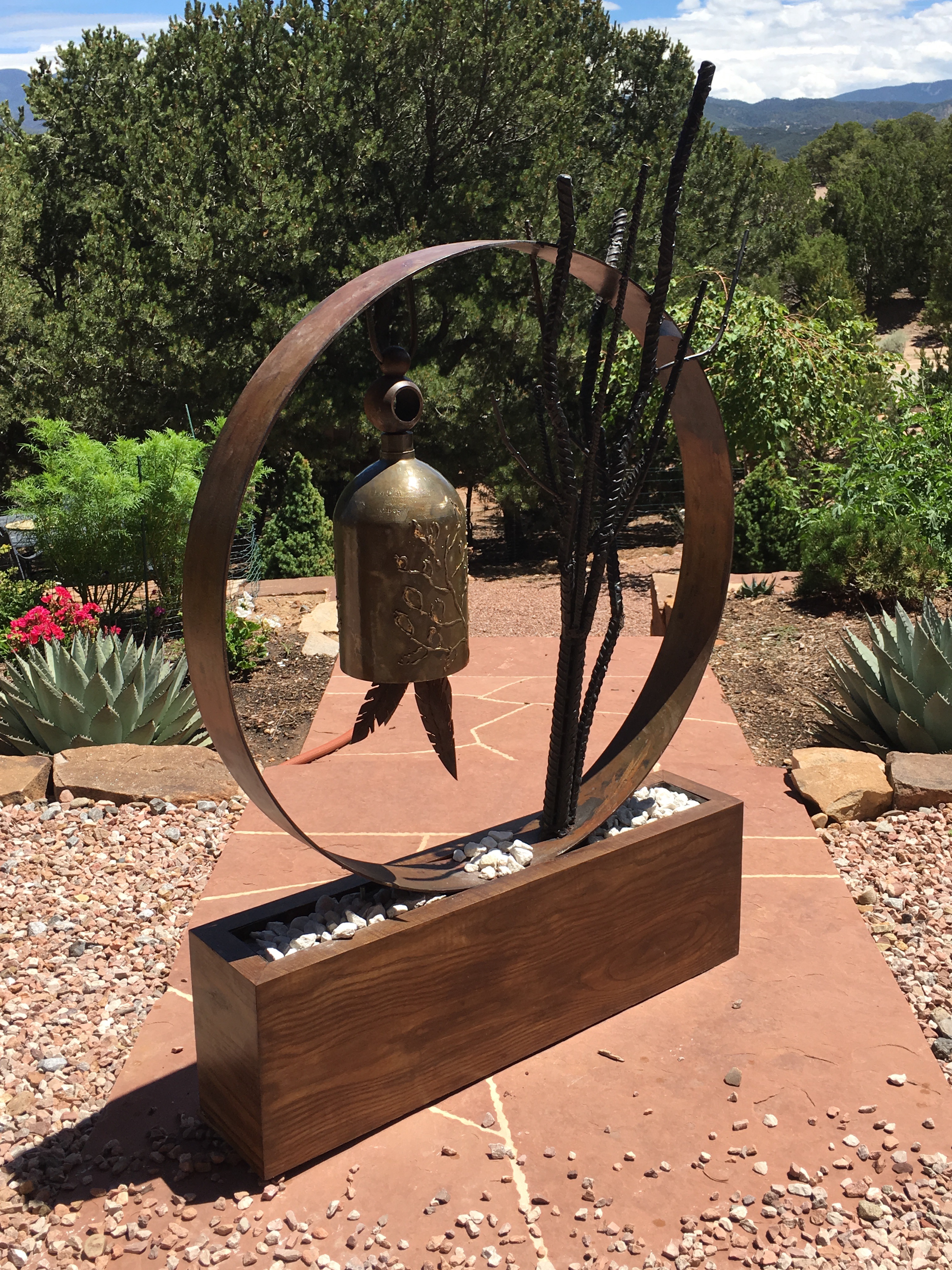
Wind


Steel 35″ x 35″ x 7″
Wood base 35″ x 10″ x 7″

When the wind stirs, a Native American’s thought turns toward the Great Spirit. May the sound of this wind-chime do the same.

These are the thoughts and this is the prayer of Chief Yellow Lark (Lacota).

Oh, Great Spirit,
whose voice I hear in the winds
and whose breath gives life to all the world, hear me.
I am small and weak.
I need your strength and wisdom.
Let me walk in beauty and make my eyes
ever behold the red and purple sunset.
Make my hands respect the things you have made
and my ears sharp to hear your voice.
Make me wise so that I may understand
the things you have taught my people.
Let me learn the lessons you have hidden
in every leaf and rock.
I seek strength, not to be superior to my brother,
but to fight my greatest enemy – myself.
Make me always ready to come to you
with clean hands and straight eyes,
so when life fades, as the fading sunset,
my spirit will come to you
without shame.

The photo was taken in summer. The piece itself is set in winter. The branches of the tree are bare. The clapper is moved by three feathers. The piece is of steel that rests on an alder wood base.

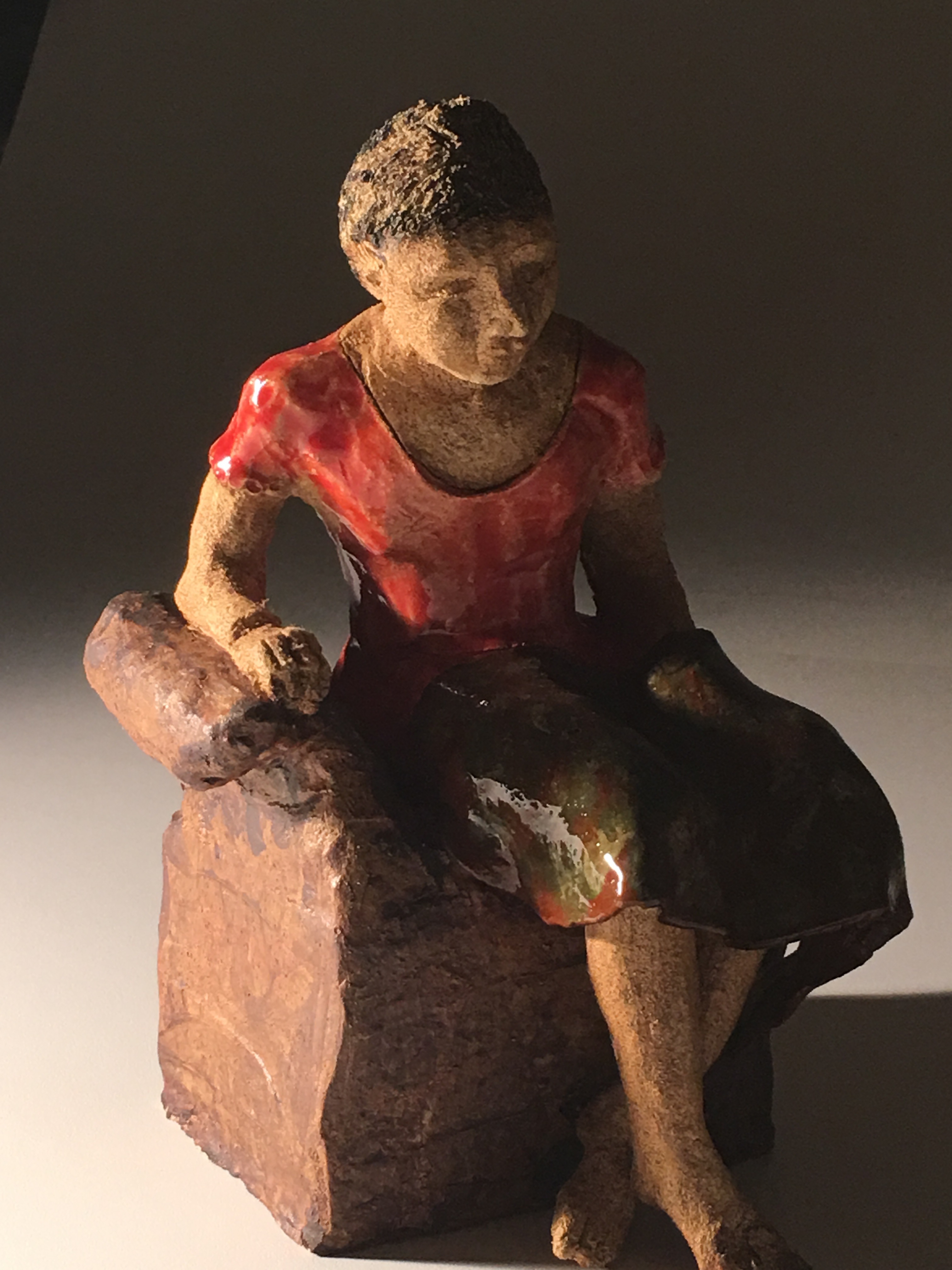
Musing …Pregnancy

Musing

Pregnancy … Musing

10″ x 8″ x 7″

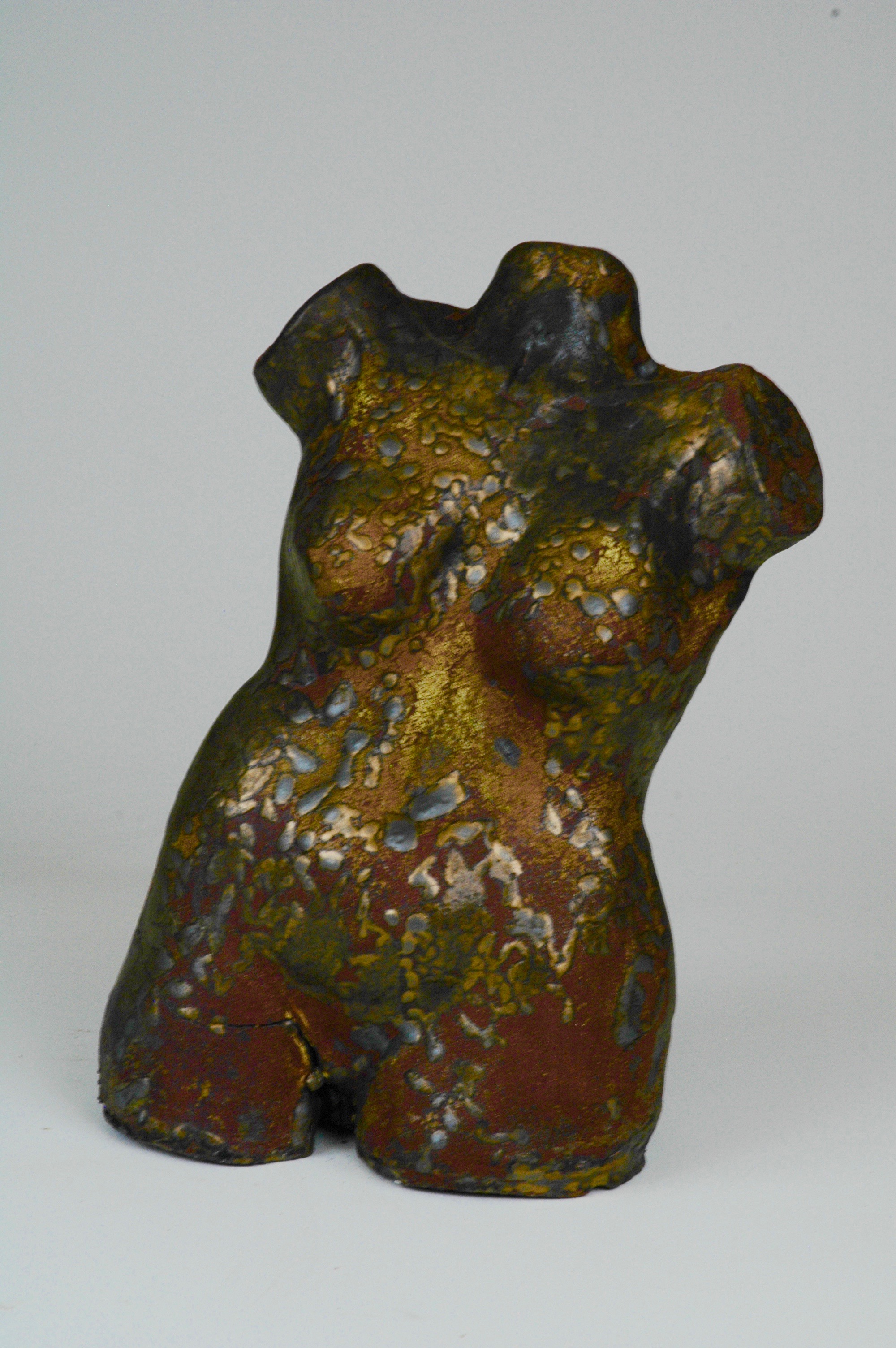
The sculpture was occasioned by a chance request of a pregnant artist working across from me in a large shared studio. The room was quiet. I should say quiet until the young woman let out a shriek. She motioned to a woman working beside her. “Come over here. Feel the little guy kicking.” The woman went over and placed her hand on the woman’s belly. The pregnant woman seemed lost in reverie. Then she looked at me. “Come over here. Feel his foot,” I was hesitant. It seemed a little too intimate to do with someone I hardly knew.

However, touching her belly and seeing her lost in reverie got me thinking. There no other way that anyone enters into the world except through the body of the woman.

To quote John O’Donohue … A woman “is the portal to the universe. No two humans can ever come closer than when one is forming inside the other’s depths. No man ever comes nearer to a woman. No woman ever comes nearer to a woman. During the entire nine months the mother sees nothing. The whole journey is a hidden one. It is the longest human journey from the invisible to the visible. From every inner pathway, the labyrinth of her body brings a flow of life to form and free this inner pilgrim.”

The woman I’ve sculpted was occasioned by seeing Nicolas Africano’s untitled glass sculpture of a sitting woman.

Marcus Aurelius

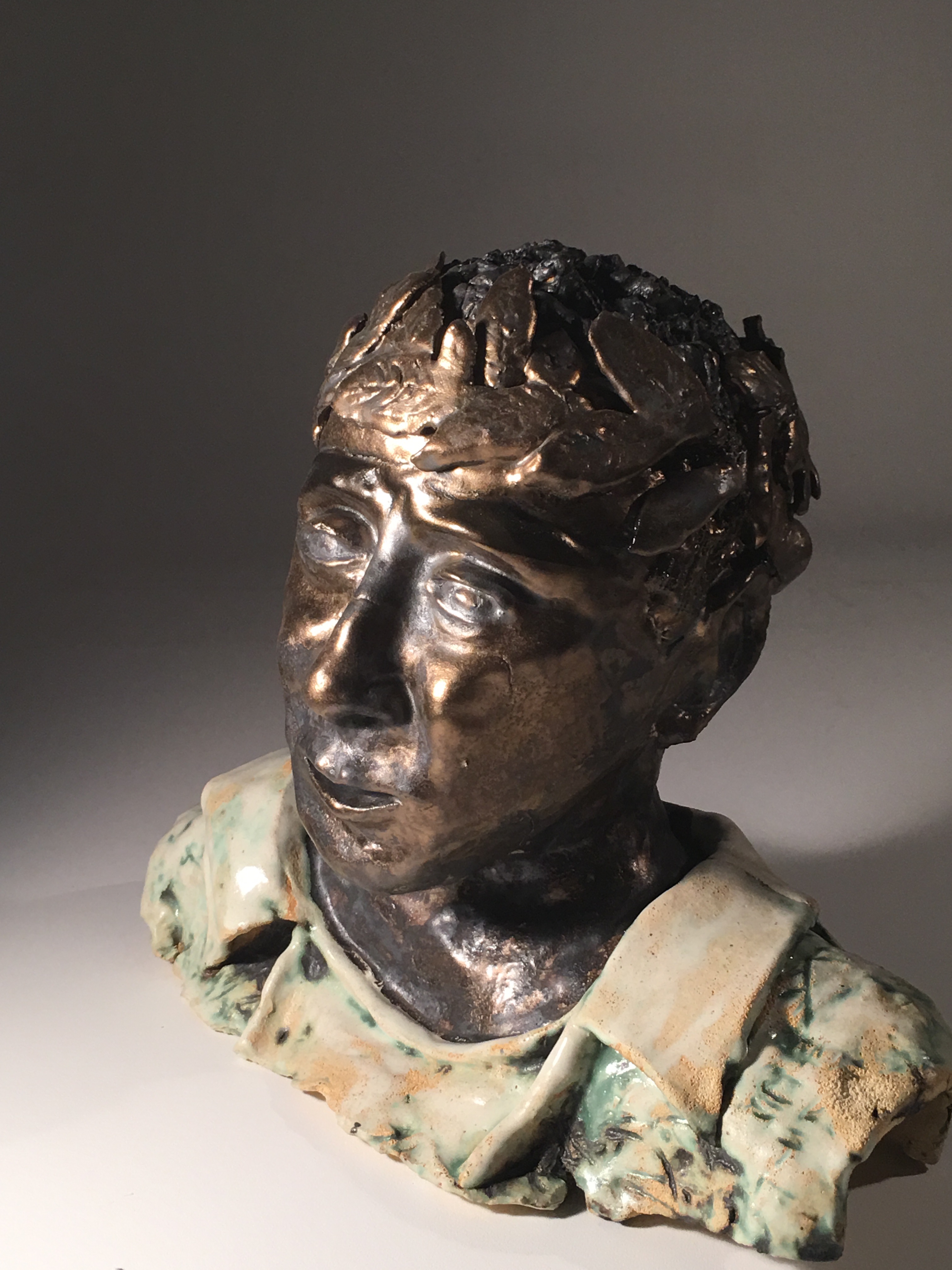
Marcus Aurelius

Marcus Aurelius


12″ x 12″ x 8″


While antiquity has left us numerous busts of Marcus Aurelius, I wanted to sculpt another. Why? Because I admire the man. He had an inward life. This is how Professor Joseph Badaracco of the Harvard Business School described the emperor’s way of living.

“Marcus knew full well the areas and responsibilities of practical life. He ruled a vast, diverse, unruly empire that spanned much of Europe, North Africa, and the Middle East. Marcus was…the chief priest of the Roman religion, and the highest judge in the Roman courts…. How did Marcus Aurelius combine the life of action with the spirit of reflection? How did he take the long view of the urgent tasks of the present moment? The answers lie in his personal journal. During the last years of his life, Marcus kept an informal record of his reflections, observations, and self-criticisms. He wrote for himself, not for the eyes of others. He wanted to understand who he was and how he should work and live. Marcus called the journal “To Himself,” and only centuries later did it come to be called “Meditations.” (available free on Kindle, my note)
….
“The first lesson Marcus Aurelius might suggest for managers has nothing to do with work. In fact, its focus is on “not” working. Marcus’s advice would be to work hard to create moments of serenity. Again and again, throughout Meditations, Marcus reminds himself to slow down and step back, to withdraw and reflect. He writes, “Are you distracted by outward cares? Then allow yourself a space of quiet, wherein you can add to your knowledge of the Good and learn to curb your restlessness.” He tells himself, “Nowhere can a man find a quieter or more untroubled retreat than in his own soul.” And again, “Avail yourself often, then, of this retirement, and so continually renew yourself.”

“This talk of retirement and retreat may sound otherworldly and monkish. It may suggest someone without the stomach for the hard work of trying to make a practical difference in the world. But there is no indication that Marcus ever shirked the duties and cares of his position. He ruled until his death—and may actually have hastened it—because he refused, to the very end, to lay down any of the duties and burdens of his office.”
….
“Were Marcus Aurelius alive today, he might well ask managers whether they have, somewhere in their lives, a counterpart to his tent, with its candle and plain table. He would be inquiring (discreetly and quietly—for he was, by all accounts, a gentle soul) not about a physical location, but about a mental retreat where they could reflect and renew themselves. Marcus might well be astonished and concerned at how infrequently the men and women who shoulder so many of the world’s responsibilities remove themselves from other people, agendas, deadlines, telephones, and computers, and simply sit for a while and examine themselves, their lives, their thoughts and feelings.”

Joseph Badaracco, Defining Moments, pp 122, 123.

Joseph

Joseph

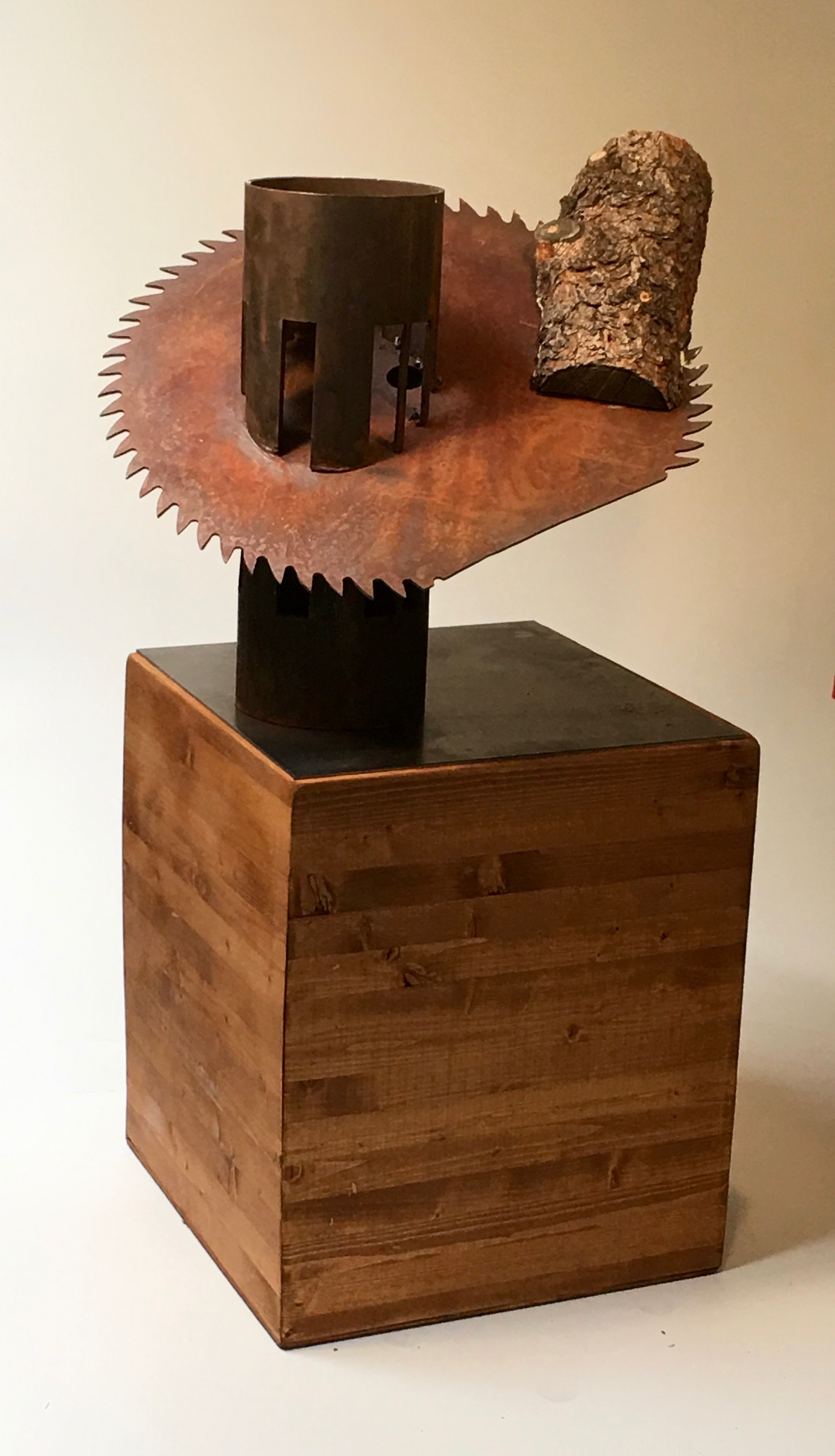
Joseph (steel) 18″ x18″ x 22″
Base (wood) 17″ x 17″ x 17″


Why would anyone name this contemporary sculpture “Joseph?” I reference the father of Jesus.

Statues of the sainted Joseph are frequently saccharine, often in plaster, sometimes plastic, and almost always of a Caucasian.

I have juxtaposed a saw blade, wood, and steel. My effort is to make a piece that is representative of the man, one that has its own beauty while representing a workman that has strength of character. Surely this image of the man is no less accurate, and hopefully more captivating, than a plastic statue.

The massive saw blade is discarded industrial waste. The wood was found among the fallen piñon trees in the hills surrounding Santa Fe. Together these seemingly unrelated discarded pieces make a statement…as does the life of the man named Joseph about whom we know little.